


Exploring Scotland’s Past with David MacPhail
Posted on 08/09/2023 in Books Fun Stuff Guest posts
10 Free Historical Sites Perfect for Family Adventures
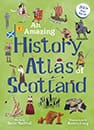
Days out with the kids can cost an arm and a leg, but it doesn’t have to cost a penny. Let children’s author and tour guide David MacPhail (whose new book An Amazing History Atlas of Scotland, illustrated by Anders Frang, is out now) take you on a tour round 10 of the best historical sites to visit in Scotland with your kids, all for FREE.
Before I start, it’s worthwhile pointing out that most of Scotland’s museums, galleries, botanic gardens and cathedrals are absolutely FREE. It’s wonderful, it’s beautiful, it’s unbeatable. Go out and enjoy! It’s impossible to list them all. Glasgow has Kelvingrove and the Riverside Museum. Edinburgh has the National Museum, the Botanic Gardens and St Giles Cathedral. Aberdeen has its new Art Gallery and its Maritime Museum, while Dundee has the McManus. And don’t forget the Highland Folk Museum in Newtonmore, which brings the past of the highlands very much to life. BUT, if you’ve been there and done all that, or if you’re looking for something a bit different, here are 10 great options you might otherwise have missed…
1 – Standing Stones
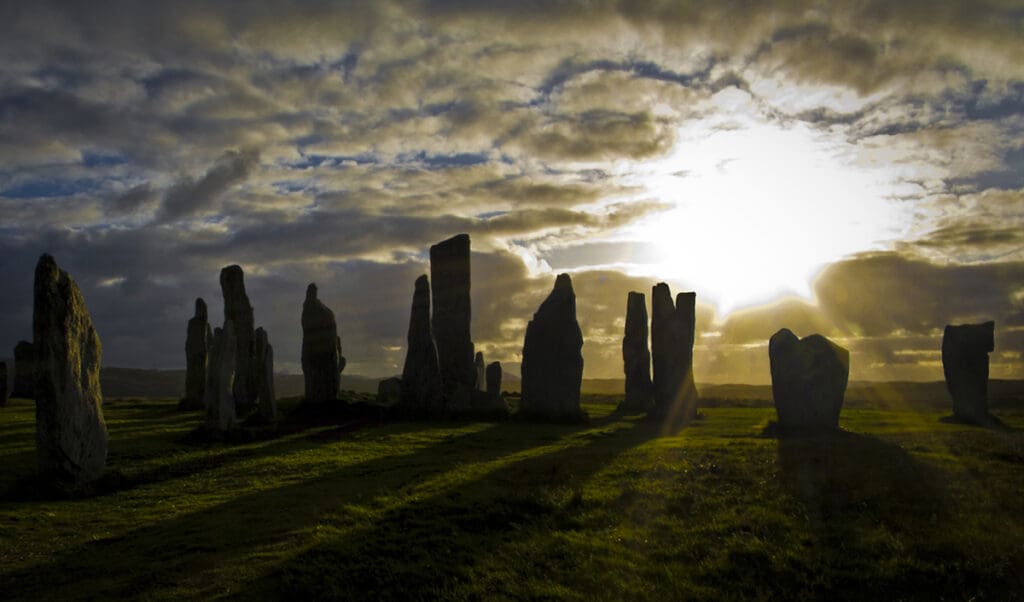
Callanish standing stones. Photo by Colin MacLeod.
Many of Scotland’s stone age monuments predate Stonehenge, and even the great pyramids. There can be few more awesome, elemental sites than the standing stones at Callanish in the Outer Hebrides. The stones were hewn out of 3000-million-year-old Lewissian gneiss, one of the oldest rocks in the world. Or maybe not. According to legend they are actually ancient giants who were turned to stone by St Kieran for refusing to become Christians. There are many other stone circles, such as Ring of Brodgar in Orkney, Machrie Moor on Arran, Croft Moraig in Perthshire and Torhouse in Galloway. At Clava Cairns, near Culloden in Inverness, there are fascinating bronze age burial cairns. The Picts also left lots of standing stones, with enigmatic carved symbols that no one quite knows the meaning of, such as the ones at Aberlemno, near Forfar.
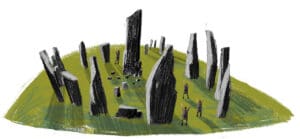
Getting there: For Callanish, use bus W2 from Stornoway. There’s a bus stop, and free parking.
2 – Dinosaur Footprints
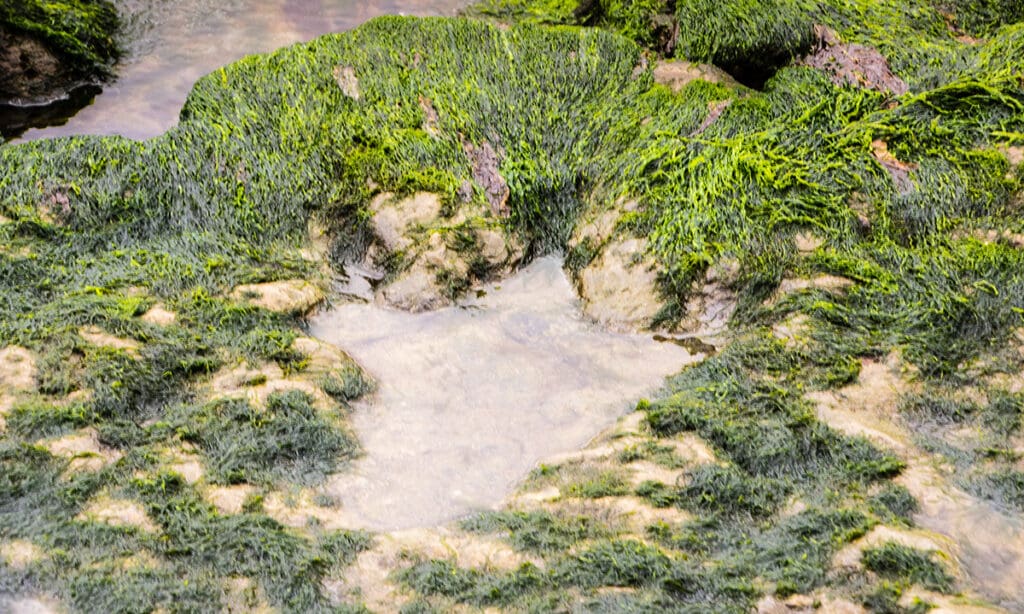
Dinosaur footprint at An Corran Beach, Staffin. Photo by Helen Littlethorpe.
Are your kids dinosaur mad? About 160 million years ago the Isle of Skye was a sub-tropical lagoon. A group of flesh-eating dinosaurs, probably Megalosaurus, wandered across a mudflat leaving their distinctive footprints behind them. These footprints were covered by mud, preserving them for posterity. You can still see them today at An Corran Beach at Staffin. Make sure you’re there at low tide.
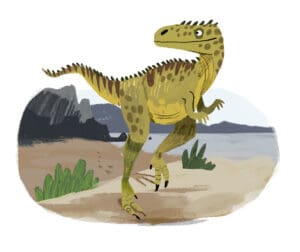
Getting there – Bus 57A from Portree takes you to Staffin, or there’s free parking at the beach.
3 – Viking Unst
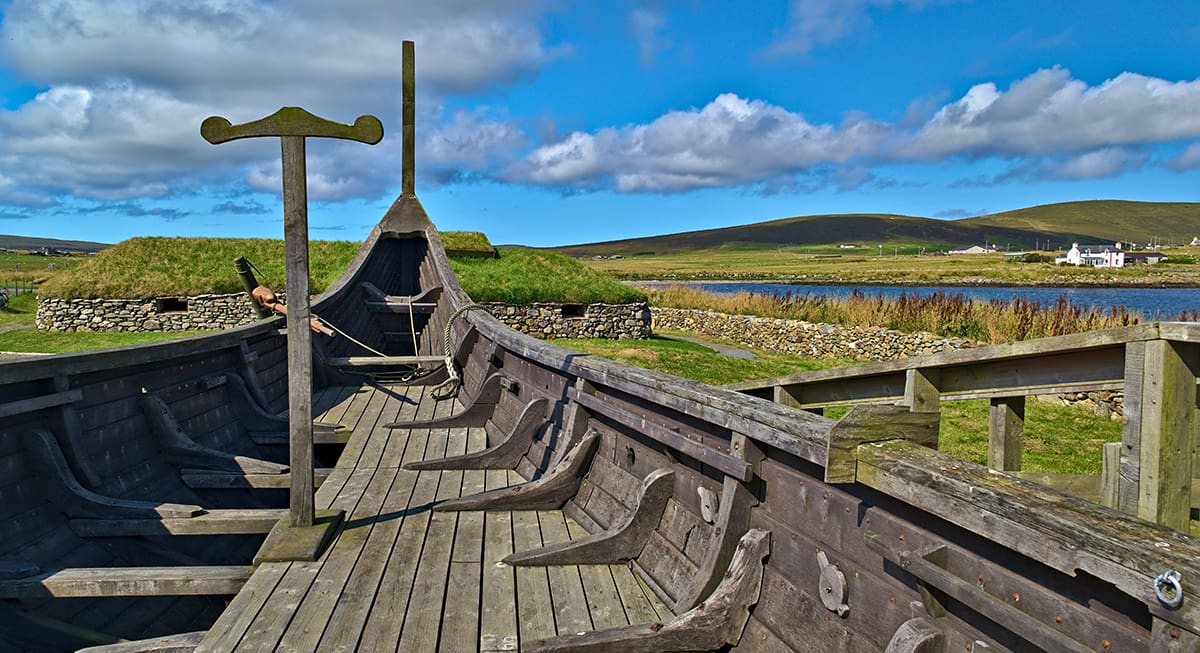
Viking longship at Haroldswick. Photo by Peter Stenzel.
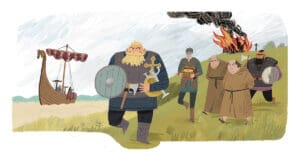
Vikings are a common topic at school, so many kids will already know something about these Norse invaders. It’s thought that the island of Unst in the Shetlands is where the Vikings first made landfall. Archaeologists have uncovered the remains of dozens of Viking longhouses. At Haroldswick, you can find the Skidbladner, a full-size replica of the legendary Gökstad ship. It really is rather good. Here, you can let the kids climb around the ship, unleashing their inner Viking. Right next to it, there’s also a terrific reconstruction of a Viking longhouse.
If you have a car, then why not push on a teensy bit to the car park at Hermaness nature reserve. After a brief hike over the headland, there’s a wealth of wildlife to spot and scenic views. Extra history points if you spot Muckle Flugga, Scotland’s most northerly point and site of a dramatic lighthouse. During the golden age of lighthouse construction in the 1800s, Scotland was at the forefront of lighthouse technology. This is just one of the many lighthouse jewels around Scotland’s coast.
Getting there – Bus 28 serves the area from the ferry. Don’t miss the quirky Bobby’s bus shelter at Baltasound. If driving, head straight for the Skidbladner. Parking is free.
4 – Greyfriars Kirkyard
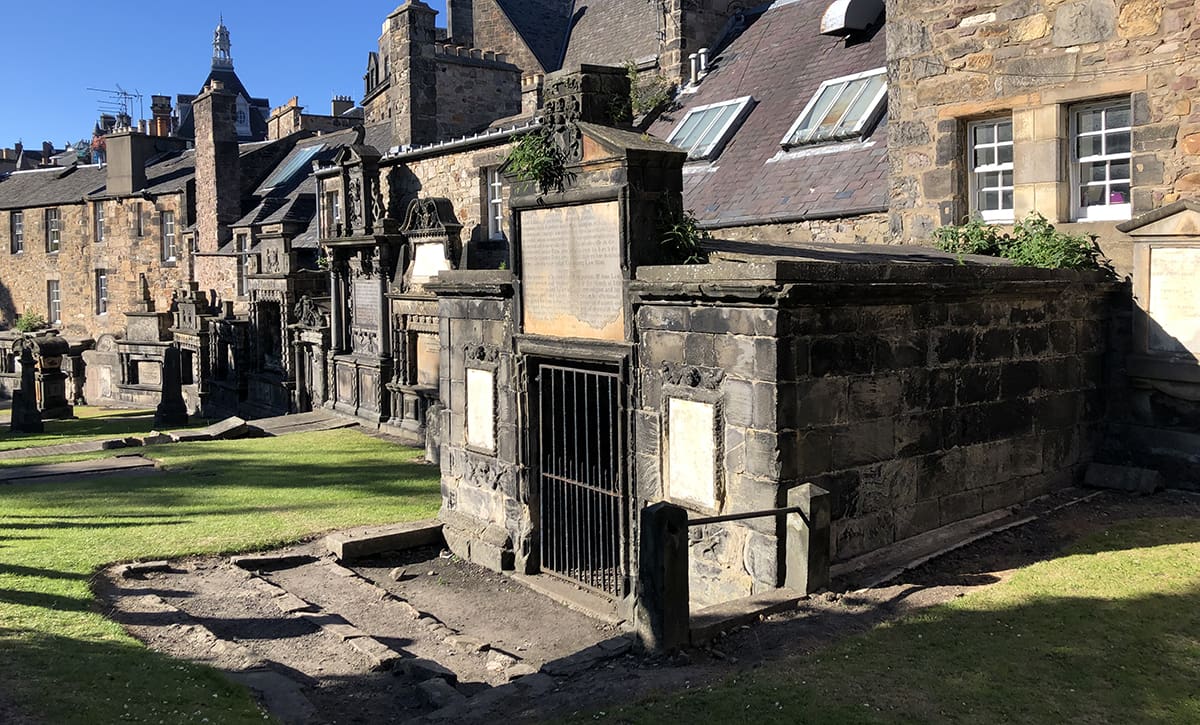
Greyfriars Kirkyard. Photo by Darren B Hillman.
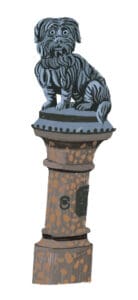 I’ve always loved graveyards. They’re green and leafy and quiet, and they often provide a haven from the bustling city traffic. There are none more historic than Greyfriars Kirkyard in central Edinburgh. Here, on one of the flat grave stones, thousands signed the National Covenant in 1638. It was a huge moment in Scotland’s history, where Scots asserted their rights to their own religion. There’s also the Martyrs Monument and an area called the Covenanters Prison, which was once used as a concentration camp for rebellious covenanters. Kids will no doubt be less interested in that, and more interested in Greyfriars Bobby, the terrier who hung about the graveyard for many years, loyally standing by his deceased master’s grave. Body snatchers once used this graveyard in the 1800s. They would dig up recently buried bodies in the dead of night and sell them to the doctors at the University, who were always on the lookout for corpses to dissect. You can still see mortsafes, cages that were build around graves to stop these gruesome body snatchers in their tracks. Among others buried here are James Hutton, who is known as the father of geology; Captain Porteous, the Captain of the city guard who was lynched during the Porteous riots in 1736; and William Topaz McGonagall, who was known as the world’s worst poet and is one of several graveyard residents who allegedly gave their names to JK Rowling’s Harry Potter characters.
Getting there – No bother, it’s in the middle of Edinburgh.
5 – Brochs
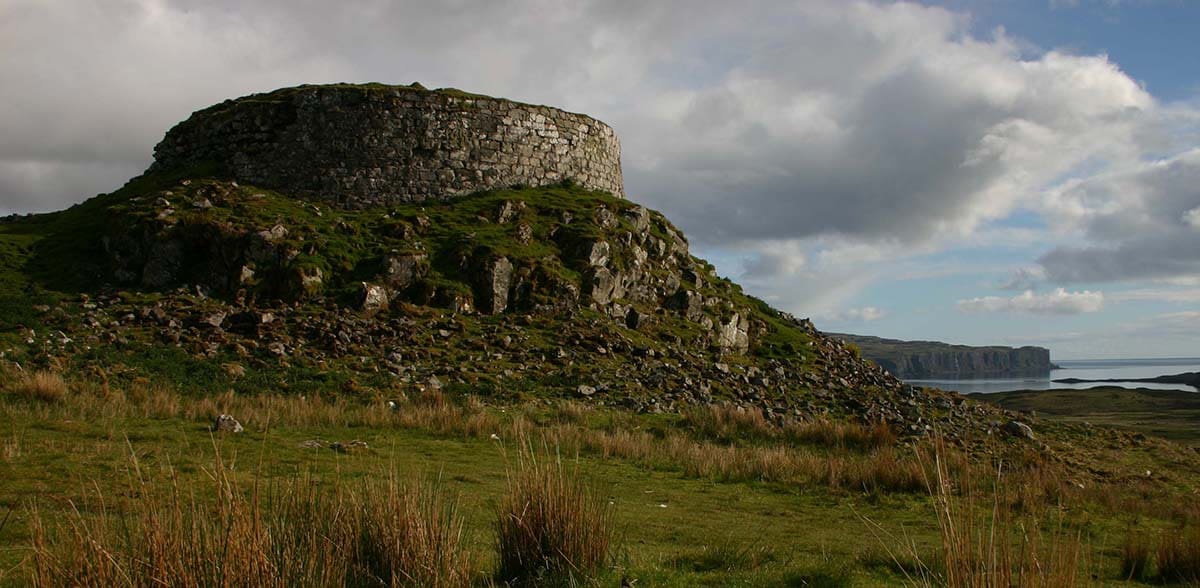
Dun Beag, Skye. Photo by Tom Parnell.
During the Iron Age, between about 400BC and 100AD, many tall stone towers called brochs were built around the north and west coasts. They helped keep out enemies, but were also a good way for local landowners and chiefs to show off. The broch at Dun Beag on Skye is a short walk uphill from the main road, where there’s free parking. Here, you can still see the staircase running between the double walls. There’s an information board to help you to imagine what it might have looked like.
There are plenty more Brochs to visit. If you’re in Lerwick on Shetland, you could stroll to the Clickimin Broch, which is not far from the centre of town.
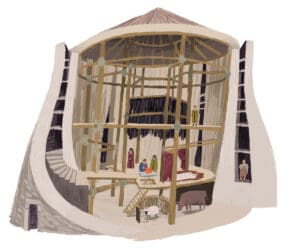
Getting there: For Dun Beag, A863 near Bracadale. Watch out for pesky ticks!
6 – Dunadd
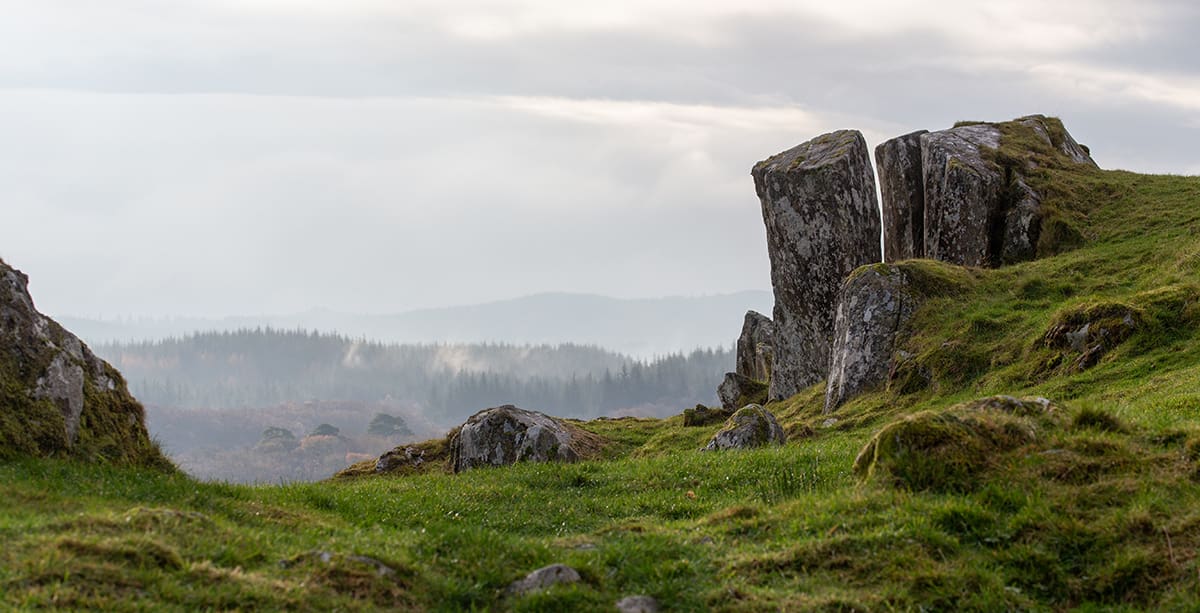
Dunadd, Argyll. Photo by Tom Parnell.
This rocky hillock near Kilmartin, Argyll, is known as the cradle of Scotland. It was once a royal seat of power. The first Scot to rule here as King was said to be Fergus Mor, who migrated from Ireland around 500 CE. As you climb up the hill through a natural passage, you can still see what’s left of the original stone defences. There are rock carvings, the most interesting being the size 9 foot at the summit. It is thought this was part of an ancient coronation ritual. No doubt the kids will want to have a go and see if their feet fit. You can double up your history hit by taking in one of the many prehistoric sites at nearby Kilmartin Glen, such as the 5000-year-old Temple Wood Stone Circle.
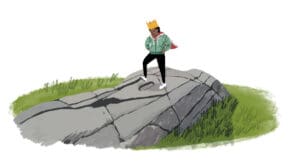
Getting there: Just off the A816 near Lochgilphead. Buses also go from Lochgilphead.
7 – Caledonian Canal
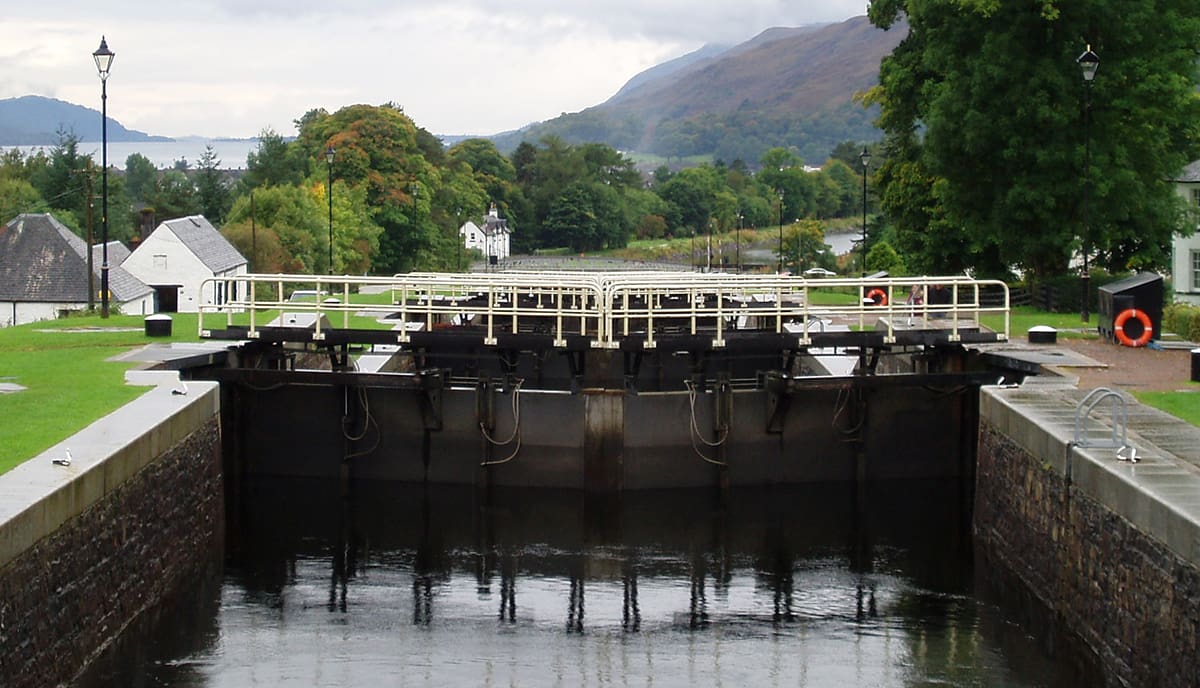
Neptune’s Staircase. Photo by Amanda Slater.
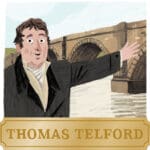
In the early 19th Century, the great engineer Thomas Telford built a canal that linked Inverness with Scotland’s west coast. It spans 60 miles, though much of that is crossing lochs such as Loch Ness. Nowadays, it is mostly used for recreation. The best place to see it is at Neptune’s Staircase, where the canal climbs 60 feet in a series of 8 locks. It’s a great place to watch boats, both big and small, as they pass through the locks. There’s another series of locks at Fort Augustus.
Getting there: For Neptune’s staircase, there’s free parking nearby, or get buses N46/47 from Fort William.
8 – Dunkeld

Dunkeld Cathedral. Photo by Stu Smith.
 Today, Dunkeld seems like an idyllic spot. The town is made up of pretty white cottages on the banks of the Tay, overlooked by Shakespeare’s Birnam Wood from Macbeth. However, it has a bloody past. If you look closely at the east gable of the historic cathedral, you’ll see bullet holes. These are from a terrible battle fought in the town’s streets in 1689 between Jacobites and the government’s Cameronian regiment. The Cameronians were told to hold the town at all costs, even though they were outnumbered four to one, and so they did. Most of the town you see today was rebuilt soon after.
Getting There: Dunkeld and Birnam train station is on the main Perth-Inverness line.
9 – St Andrews Cathedral
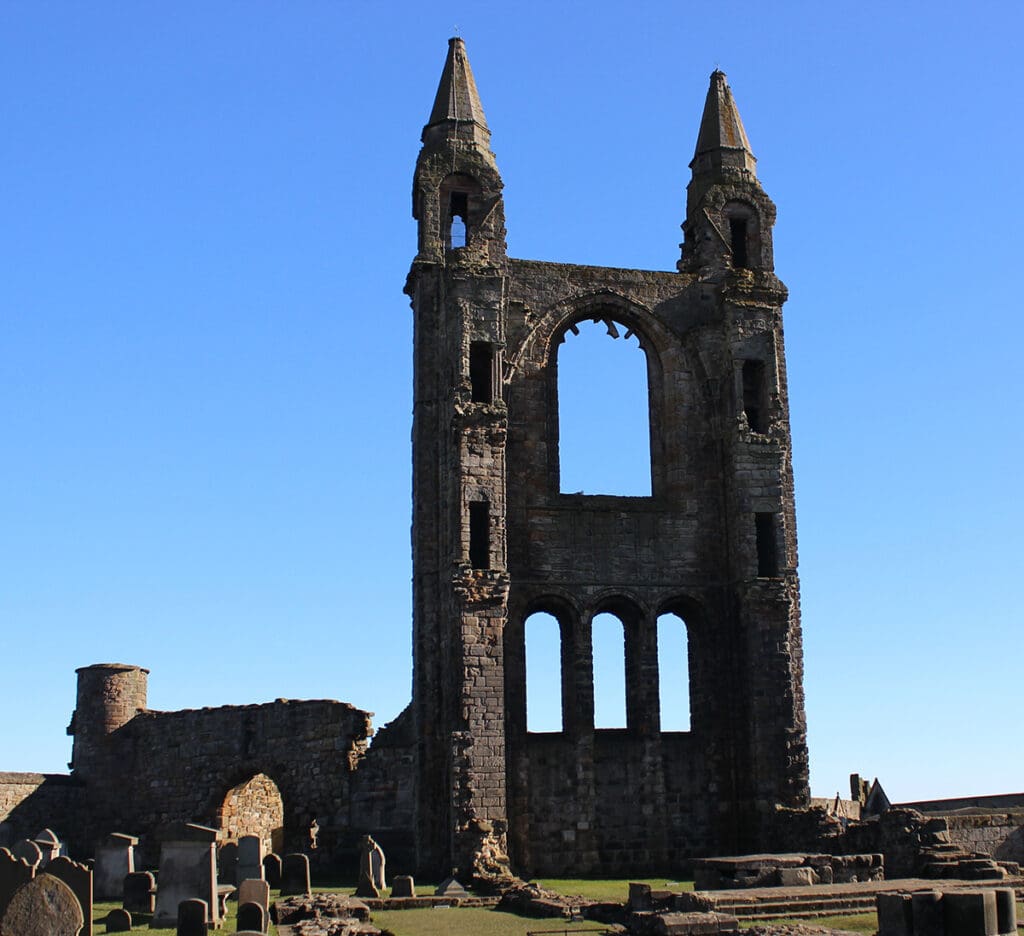
St Andrews Cathedral. Photo by Steven Straiton.
 Legend has it that St Regulus was shipwrecked on the rocks nearby, washing ashore along with the bones of St Andrew. Here, it’s said, he built his church. The Cathedral was finished in 1158 CE, and was one of the most important religious sites in Scotland. However, it was ruined during the reformation in the 16th Century. Today, the grassy ruins are a lovely, sunny spot to perch and soak up history. There’s some good ice cream to be had nearby too, just in case you want to splash out after your your free history hit!
Getting there: No bother, it’s in the centre of St Andrews. Please note the grounds are free to access but the museum isn’t.
10 – The Antonine Wall
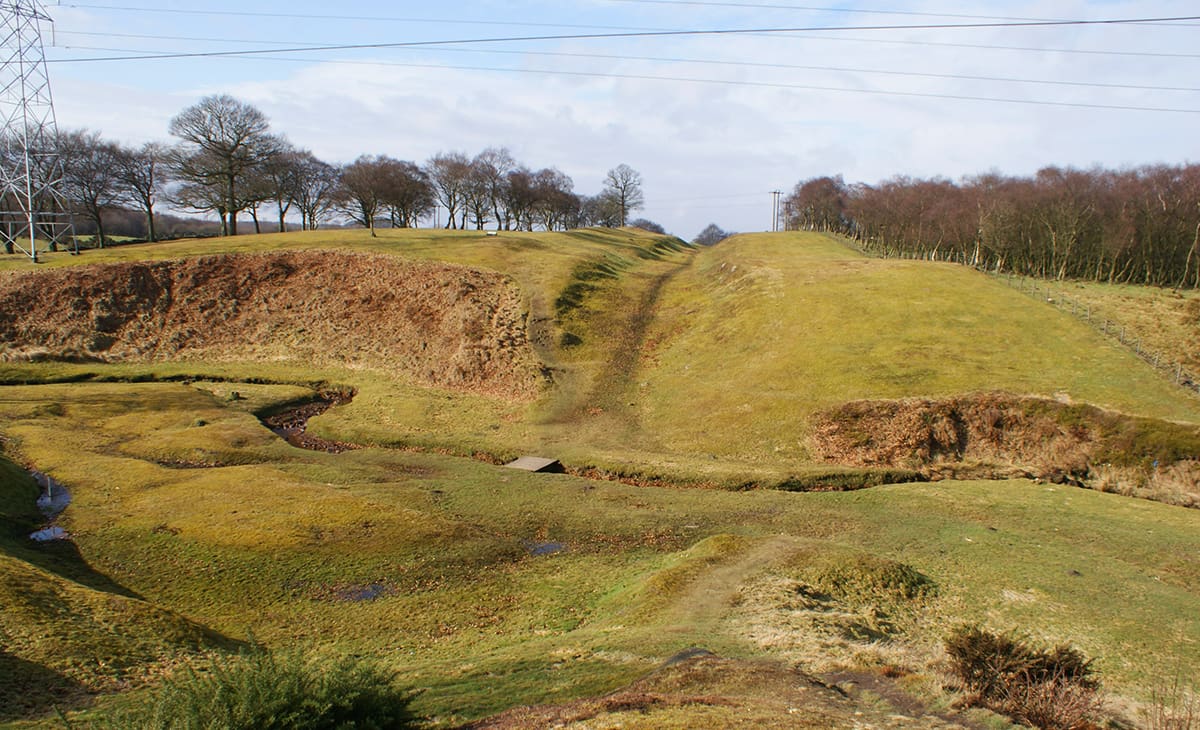
Rough Castle, the Antonine Wall. Photo by Puffin1k.
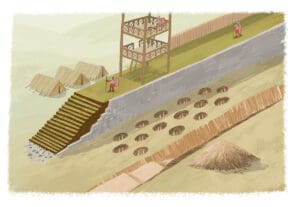
The ancient Romans tried several times to make inroads into what is now Scotland. They failed, but they left behind a huge wall which remains Scotland’s biggest historical monument. Built just after 142 CE to mark the edge of their empire, the wall stretched 39 miles between Old Kilpatrick on the Clyde and Bo’ness on the Forth. There were about 17 forts along its length. Bearsden Roman Bathhouse is a good starting point. However, one of the best forts to visit in my view is Rough Castle, near Falkirk. Here you can clearly see the ditch and ramparts, and helpful information boards give you a great idea of the layout of the fort. You can even see remains of lilia, oval-shaped man-traps dug by the Romans to defy the troublesome Caledonians. Why not take the dog, and let the children roll around the grassy, defensive ditches of our long-defeated foes.
Getting there: Follow the signposts from Broomhill Road, Bonnybridge, near the helpfully-titled Antonine Primary School. Or, you could double up your history hit by starting at the Falkirk Wheel (where there’s free parking), and walking from the other direction. The Falkirk Wheel is a modern wonder, the world’s first rotating boat lift, built to link up the Forth and Clyde and Union canals, an important relic of our industrial history. Now that’s a grand day out!
All illustrations © Anders Frang, 2023.
About An Amazing History Atlas of Scotland
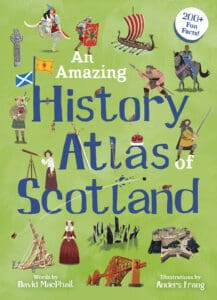
Did you know that long ago Scotland was buried under a layer of ice one kilometre thick? That Orkney’s neolithic village of Skara Brae is older than the Great Pyramid in Egypt? Or that, in order to take back Roxburgh Castle, Robert the Bruce’s soldiers disguised themselves as cows?
From Neolithic settlers and Viking invaders, to Jacobite rebels, great Enlightenment thinkers and World War II evacuees, this fun and fascinating historical atlas takes readers on a tour through time and place. Discover how Scotland’s islands, Highlands, cities, castles and crofts connect to the most amazing moments in this nation’s rich history.
Packed with interesting and informative facts from David MacPhail and brilliantly vibrant illustrations by Anders Frang, An Amazing Illustrated History Atlas of Scotland is a big, beautiful hardback book that will bring history to life for young readers.
About David MacPhail
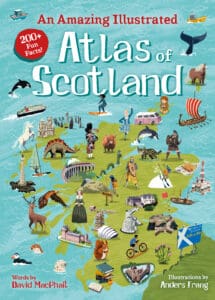
 David MacPhail has worked as a chicken wrangler, a ghost-tour guide, and a waiter on a tropical island, and he now has the sensible job of writing about yetis, Vikings, and the funny side of history. David is the author of the Lollies-nominated Thorfinn the Nicest Viking series, the Top-Secret Grandad series, the Velda the Awesomest Viking series, An Amazing Illustrated Atlas of Scotland and An Amazing History Atlas of Scotland. He lives in Perthshire, Scotland.
About Anders Frang

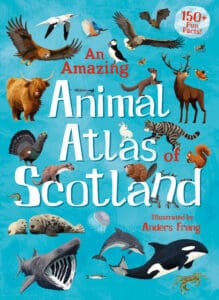
Anders Frang is an illustrator from Denmark. He studied at the Danish Design School in Copenhagen as well as Edinburgh College of Art, Scotland. He is the illustrator of An Amazing Animal Atlas of Scotland, An Amazing History Atlas of Scotland and An Amazing Illustrated Atlas of Scotland. Anders currently lives in Copenhagen.
Also available:
Explore the blog by category
Click to select a category.
Related books
Join our Mailing List!
Get the latest news, book releases and special offers, straight from the Kelpies' Mouth.

The Kelpies Prize 2027